
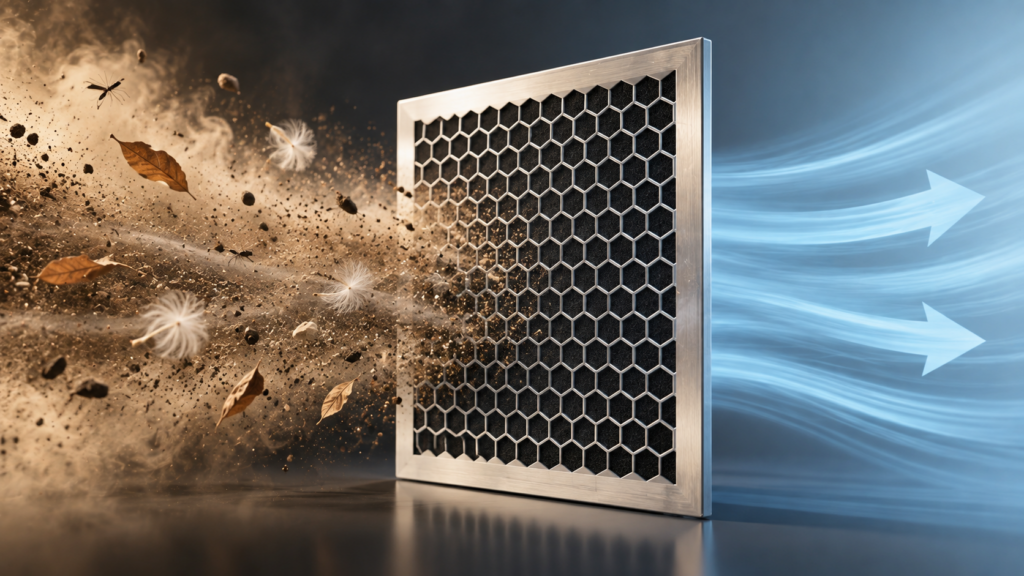
When designing electronics for outdoor or demanding environments, protecting internal components from dust, debris and water is critical. That is why IP ratings are frequently used when specifying electronic enclosures. But an IP rating only tells part of the story.
For equipment that relies on direct air cooling, engineers also have to consider airflow, pressure drop and thermal management. An enclosure may provide strong environmental protection, but if airflow becomes too restricted, the electronics inside can still be at risk. Understanding how IP protection and airflow work together can help engineers design more reliable equipment.
What Is an IP Rating?
IP stands for Ingress Protection. Defined by IEC 60529, an IP rating indicates how effectively an enclosure protects its internal components from solid objects and liquids. An IP rating contains two numbers. For example: IP54. The first digit represents protection from solid objects and dust. The second digit represents protection from water. Common ratings used with electronic equipment include:
- IP54: Dust protected and resistant to splashing water
- IP55: Dust protected and resistant to water jets
- IP65: Dust tight and resistant to water jets
The appropriate rating depends on where the equipment will operate and the environmental conditions it is expected to encounter.
Why Airflow Matters
Environmental protection is important, but electronic equipment also generates heat. Power supplies, processors, inverters, batteries and other components can all increase internal enclosure temperatures. If that heat is not removed effectively, components may experience additional thermal stress.
Direct air cooling is one method used to control those temperatures. Fans pull cooler outside air into the enclosure and move warmer air out. The challenge is that outside air can also carry:
- Dust
- Pollen
- Insects
- Seed debris
- Construction particles
- Moisture
- Other airborne contaminants
Air filtration helps protect the electronics while still allowing cooling air into the enclosure. The key is finding the right balance.
More Protection Can Affect Airflow
Every filter introduces some resistance to airflow. This resistance is commonly measured as pressure drop.
As filtration requirements increase, media may need to capture smaller particles or provide additional protection against moisture. Depending on the filter design, that can increase airflow resistance. Too much restriction can reduce the amount of cooling air reaching internal components. Potential results include:
- Higher operating temperatures
- Reduced cooling efficiency
- Increased fan workload
- Greater energy consumption
- Additional thermal stress
- Reduced equipment reliability
The goal is not simply to maximize filtration. The goal is to achieve the required environmental protection while still maintaining enough airflow to cool the equipment effectively.
IP Ratings Apply to the Entire Enclosure
Another important distinction is that the IP rating applies to the complete enclosure system, not simply the filter. Filters, gasketing, mounting surfaces, seals, louvers and enclosure construction all contribute to the final level of ingress protection. UAF designs filtration solutions to help OEMs and enclosure manufacturers support specific enclosure-level protection goals while also considering airflow and thermal requirements.
This is why filter selection should ideally happen early in the design process.
Filter Size and Surface Area Matter
The size of a filter can significantly affect airflow performance. A larger filter surface area allows air to move through the media at a lower face velocity. In many applications, this can help reduce pressure drop while still providing the desired filtration performance. Engineers should consider:
- Required airflow
- Filter surface area
- Pressure drop
- Fan performance
- Filter media
- Dust-loading capacity
- Water exposure
- Internal heat generation
- Available enclosure space
- Maintenance intervals
Looking at these variables together creates a more complete thermal-management strategy.
Choosing the Right Level of Protection
Not every application requires the highest possible IP rating. The better approach is to determine what environmental conditions the equipment will realistically face.
For example, an indoor industrial cabinet may primarily need protection from dust and debris. An outdoor EV charger may encounter rain, insects, pollen and road dust. A telecom enclosure may need protection against dust, moisture and seasonal debris. Equipment located in harsh industrial or coastal environments may require additional protection from water, salt fog and fine particles.
Matching the filtration system to the actual environment can help avoid unnecessary airflow restriction, cost and complexity.
UAF Filtration Solutions
Universal Air Filter offers multiple filtration technologies designed to help engineers balance ingress protection with airflow.
PentaVent™ combines Quadrafoam™ media with hydrophobic mesh to help protect electronics from dust, moisture, insects and debris while maintaining a thin profile.
Weather Resistant Filters use a multi-stage filtration design for outdoor electronic enclosures where dust and water protection are important.
Outside Plant Filters are designed for more demanding outdoor environments where higher levels of dust and water protection may be required.
Design Protection and Airflow Together
Filtration should not be treated as an afterthought. During enclosure development, engineers should ask:
- How much airflow does the equipment require?
- How much heat must be removed?
- What contaminants are present?
- What IP protection level is needed?
- How much pressure drop can the system tolerate?
- What happens as the filter loads with debris over time?
Addressing these questions early can help create an enclosure that protects sensitive electronics without compromising cooling performance.
UAF Helps Balance Protection and Airflow
Universal Air Filter works with OEMs and enclosure designers to develop custom filtration solutions around specific environmental and thermal requirements. UAF can help evaluate filter media, dimensions, pressure drop, airflow, gasketing and environmental protection requirements to develop a solution that integrates with the complete enclosure.
Need Help Designing an IP-Protected Enclosure?
If you are developing outdoor electronics, telecom equipment, EV charging infrastructure, industrial controls or another air-cooled enclosure, UAF can help determine the right filtration approach. Talk to an engineer today!