
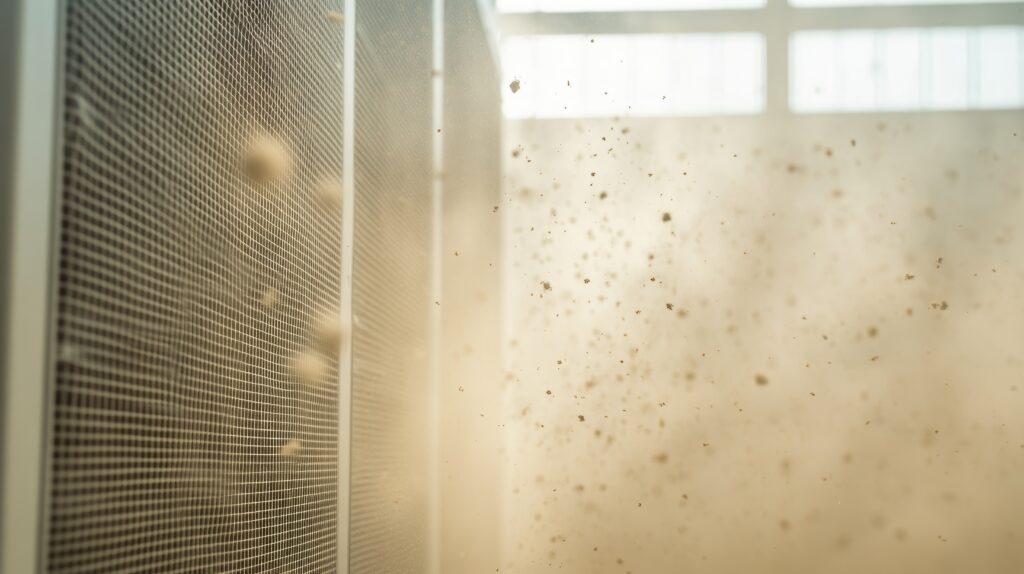
When engineers think about air filtration, dust is often the first contaminant that comes to mind. But outdoor and industrial equipment faces another category of environmental threats that can be just as disruptive: insects, cottonwood seeds, pollen, plant material and other large airborne debris.
These contaminants can collect around air intakes, obstruct cooling paths and enter electronic enclosures. Over time, the result can be reduced airflow, higher internal temperatures, increased maintenance requirements and greater risk to equipment reliability.
For equipment that depends on ambient air for cooling, keeping contaminants out while allowing sufficient airflow in is a critical part of enclosure design.
That is where the right filtration solution makes a significant difference.
Seed Debris Can Quickly Become an Airflow Problem
Cottonwood seeds and similar airborne plant material may appear harmless, but their lightweight, fibrous structure allows them to travel easily through the air.
During peak seasonal conditions, this material can accumulate rapidly on equipment air intakes.
When seed debris begins covering an intake or filter surface, available airflow can decrease. Cooling fans then have to move air through a more restricted path, potentially reducing the effectiveness of the equipment’s thermal-management system.
For outdoor electronics, telecom cabinets, power equipment, industrial controls and other direct-air-cooled systems, this can turn a seasonal environmental condition into a reliability concern.
The issue isn’t limited to cottonwood…
- Cottonwood and other airborne seeds
- Pollen
- Grass and plant material
- Leaves and fibers
- Bird feathers
- Insects
- Dust and dirt
- Construction debris
The right filtration strategy begins by understanding what the equipment is actually exposed to in its operating environment.
Insects Create a Different Type of Equipment Risk
Electronic equipment can provide insects with exactly what they are looking for: warmth, shelter and protected openings.
Once insects enter an enclosure, they can interfere with sensitive electronics, obstruct ventilation paths or accumulate around components. In certain situations, insect intrusion can contribute to electrical problems or equipment failure.
A properly designed filter or mesh barrier creates a physical line of defense around enclosure openings while still allowing the system to breathe.
But simply putting a screen over an opening isn’t necessarily enough.
The filtration system must balance contaminant protection, airflow, pressure drop, thermal performance, available space and maintenance requirements.
That balance is where custom filtration becomes especially valuable.
Protect the Equipment Without Restricting the Airflow
Blocking contaminants is only half of the equation. Air-cooled electronics still need enough airflow to remove heat generated by internal components. A filtration solution that provides excellent contaminant protection but creates excessive airflow resistance can introduce a different problem.
UAF works with OEMs and enclosure manufacturers to develop custom filtration solutions around the specific requirements of the equipment.
Contaminant size: What needs to stay outside the enclosure? Large insects and seeds may require a different filtration approach than fine dust or pollen.
Airflow requirements: The filter must allow sufficient airflow for fans and cooling systems to operate effectively.
Pressure drop: Media selection can help engineers manage the resistance introduced into the cooling system.
Environmental exposure: Outdoor equipment may need protection from multiple threats including dust, insects, water and salt fog.
Available space: Filters frequently need to fit within increasingly compact electronics enclosures.
Maintenance intervals: Filter accessibility, dust-loading capability and cleanability can influence long-term service requirements.
Rather than treating filtration as an accessory added late in the equipment design process, incorporating it into the enclosure and thermal-management strategy can help create a more effective overall protection system.
Multiple UAF Solutions for Insects and Airborne Debris
There is no universal filter for every environmental challenge. UAF offers multiple filtration technologies that can be configured around the equipment, operating environment and required level of protection.
Windowpane Air Filters and Mesh Screens
For applications where insects, seeds, feathers and larger debris are the primary concern, UAF Windowpane filter designs can incorporate open mesh screens. These lightweight solutions can provide a physical barrier while maintaining high levels of airflow.
They can also be designed in extremely thin configurations, making them useful where enclosure space is limited.
Quadrafoam™
Quadrafoam™ polyurethane foam filtration provides another option for protecting electronic equipment from airborne contaminants. Foam media can be customized based on filtration and airflow requirements and incorporated into a variety of frame designs.
PentaVent™
For outdoor electronic enclosures facing multiple environmental threats, PentaVent™ combines Quadrafoam™ media with hydrophobic mesh to help keep contaminants including dust, rain, snow, insects and debris away from sensitive equipment.
Its thin profile also makes it well suited for applications where enclosure space is valuable.
Weather Resistant Filters
For more demanding outdoor applications, UAF Weather Resistant filtration solutions use a multi-stage approach designed to protect electronics against airborne contamination and water ingress while supporting direct-air cooling.
This gives enclosure designers options beyond simply sealing equipment away from the outside environment.
Filtration Is Part of Equipment Reliability
Air filters are sometimes treated primarily as maintenance components. For critical electronic equipment, they should also be considered equipment-protection components. The correct filtration solution helps control what is allowed to enter the enclosure in the first place.
By reducing exposure to insects, seeds, pollen, dust and other environmental contaminants, manufacturers can better protect sensitive components while maintaining the airflow required for cooling.
Effective filtration can also help support broader equipment goals such as:
- Maintaining consistent cooling airflow
- Reducing contaminant buildup inside equipment
- Protecting sensitive electronic components
- Simplifying preventative maintenance
- Supporting longer equipment service life
- Reducing the potential for contamination-related downtime
The greatest benefit comes from matching the filtration system to the actual environment rather than relying on a one-size-fits-all solution.
UAF Is More Than an Air Filter Supplier
Every enclosure presents a different combination of environmental exposure, heat generation, airflow, available space and regulatory requirements.
That is why Universal Air Filter approaches filtration as an engineering and equipment-protection challenge, not simply a filter-selection exercise.
UAF engineers work with customers to evaluate the application and develop filtration around specific enclosure and performance requirements. Filter media, frames, mesh, gasketing and other components can be configured to address the contaminants the equipment is most likely to encounter.
Whether the primary concern is cottonwood seeds, insects, pollen, dust, water ingress or multiple environmental hazards, UAF can help develop a filtration strategy that protects the equipment without unnecessarily compromising airflow.
From initial design and prototyping through production and replacement filtration, UAF provides a comprehensive approach to protecting critical electronics.
Is Your Equipment Protected from Its Environment?
Environmental contamination doesn’t have to be microscopic to create equipment problems.A swarm of insects, a heavy cottonwood season or an accumulation of airborne plant debris can quickly challenge an enclosure that wasn’t designed for those conditions. If your equipment operates outdoors or in an environment exposed to insects, seeds, pollen or other airborne contaminants, talk to a UAF engineer about your application.
UAF can help evaluate your airflow, enclosure and environmental requirements and develop a custom filtration solution designed around the protection your equipment actually needs.