
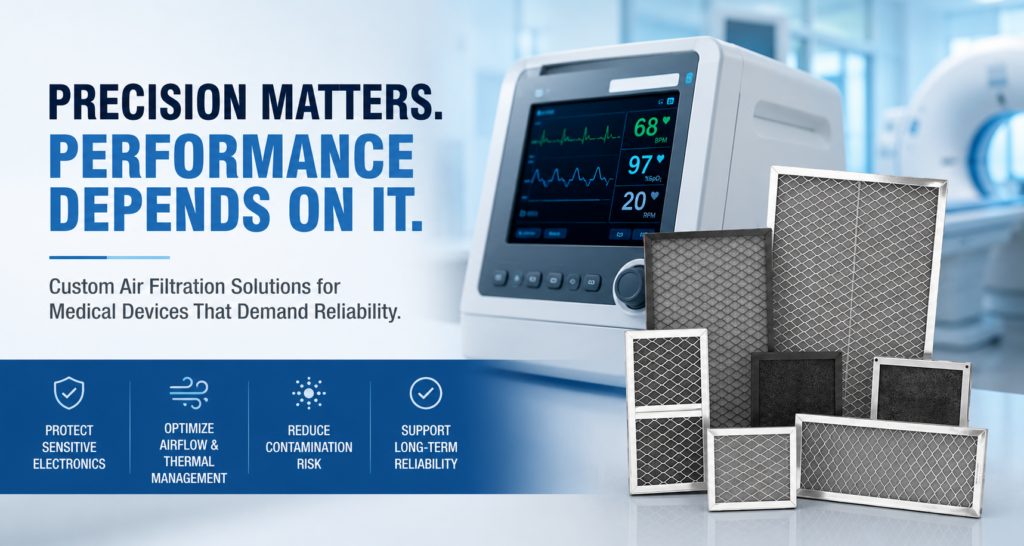
Medical devices are designed to operate with exceptional precision, consistency, and reliability. Whether used in diagnostic equipment, patient monitoring systems, laboratory instruments, imaging systems, or surgical robotics, maintaining optimal operating conditions is essential for long-term performance.
As medical technologies continue to evolve, devices are becoming smaller, more powerful, and increasingly dependent on effective thermal management and environmental protection. Sensitive electronics, compact enclosures, and continuous operating requirements place greater demands on airflow management and contamination control.
The Growing Importance of Air Filtration in Medical Devices
Airborne contaminants such as dust, fibers, pollen, and moisture can infiltrate equipment enclosures and negatively impact critical electronic components. Over time, contaminant buildup can restrict airflow, increase operating temperatures, and contribute to premature component degradation.
Unlike many commercial electronics applications, medical devices often operate under strict performance requirements where consistency is critical. Even small variations in airflow or environmental conditions can affect system reliability, maintenance schedules, and overall equipment performance.
High-performance air filtration systems help protect sensitive electronics while maintaining the airflow necessary for proper cooling and thermal management.
Thermal Management Challenges in Modern Medical Equipment
The trend toward smaller, more compact medical devices has increased power density within equipment enclosures. As electronic components generate more heat in confined spaces, effective airflow becomes increasingly important.
Restricted airflow can lead to:
- Elevated internal temperatures
- Reduced cooling efficiency
- Increased stress on electronic components
- Shortened equipment lifespan
- Higher maintenance requirements
- Potential performance degradation
Properly designed filtration systems help balance contaminant protection with airflow efficiency, ensuring critical equipment remains within acceptable operating temperatures.
Custom Filtration Solutions for Medical Device Manufacturers
Medical device OEMs often require filtration solutions tailored to specific enclosure designs and environmental conditions. Off-the-shelf filters may not provide the optimal combination of airflow, filtration efficiency, and environmental protection required for specialized applications.
Custom air filtration solutions can be engineered to address:
- Unique enclosure dimensions
- Pressure drop requirements
- Airflow optimization goals
- Moisture resistance needs
- Environmental protection requirements
- Regulatory and performance objectives
Depending on the application, filtration systems may incorporate hydrophobic media, precision gasketing, custom frames, low-profile designs, or specialized airflow configurations to maximize performance.
Measuring Filtration Performance
As healthcare technology becomes more advanced, engineering teams are increasingly evaluating filtration systems based on measurable performance metrics. Important considerations include:
- Airflow efficiency
- Pressure drop performance
- Dust-loading capacity
- Moisture resistance
- Environmental protection
- Long-term durability
- Maintenance requirements
These factors help manufacturers ensure equipment reliability throughout the product lifecycle while minimizing downtime and maintenance costs.
Supporting Long-Term Medical Device Reliability
Reliability remains one of the most important considerations in medical device design. Effective environmental protection and thermal management strategies help safeguard sensitive electronics from contamination and overheating while supporting consistent operation.
As medical devices become more sophisticated, custom air filtration solutions will continue to play a critical role in maintaining performance, protecting equipment investments, and supporting long-term operational success.
When it comes to medical technology, precision matters—not only in the device itself, but also in every component that helps protect its performance.
Talk to a UAF Engineer TODAY and see how Universal Air Filter can help!