
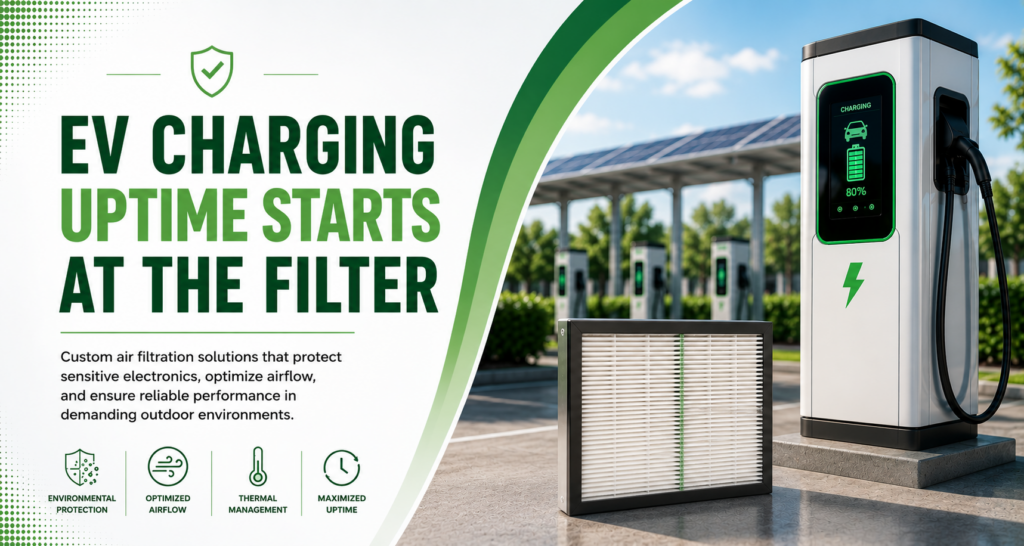
As electric vehicle (EV) adoption continues to accelerate, charging infrastructure has become a critical component of transportation networks worldwide. Drivers expect charging stations to be available whenever they need them, while operators face increasing pressure to maximize uptime, reduce maintenance costs, and extend equipment lifespan.
One often overlooked factor that directly impacts EV charging station reliability is air filtration. Proper filtration helps protect sensitive electronics, maintain airflow efficiency, and support long-term performance in demanding outdoor environments.
The Environmental Challenges Facing EV Charging Stations
Unlike indoor electronics, EV charging systems operate in constantly changing environmental conditions. Charging stations are routinely exposed to:
- Dust and airborne particulates
- Construction debris
- Traffic-generated pollution
- Pollen and seasonal contaminants
- Moisture and humidity
- Extreme temperature fluctuations
Over time, these contaminants can enter equipment enclosures, accumulate on electronic components, and restrict airflow. The result can be reduced cooling efficiency, elevated operating temperatures, and increased stress on critical system components.
Why Thermal Management Matters
Modern EV charging systems continue to become more power-dense as operators seek faster charging speeds and improved performance. Higher power levels generate more heat, making thermal management a critical design consideration.
When airflow becomes restricted due to contaminated or overloaded filters, internal temperatures can rise significantly. Elevated temperatures may contribute to:
- Reduced electronic component lifespan
- Increased maintenance requirements
- Lower system efficiency
- Greater risk of unexpected downtime
- Higher operational costs
Maintaining proper airflow helps charging equipment operate within designed temperature ranges, supporting long-term reliability and performance.
Custom Air Filtration for EV Charging Infrastructure
Every charging station installation presents unique environmental challenges. Urban charging locations may experience heavy particulate loading from traffic and construction activity, while rural installations often face agricultural dust, pollen, and airborne debris.
Custom-fit air filtration solutions allow engineers to optimize protection based on:
Enclosure Design
Filters can be engineered to fit exact enclosure dimensions, maximizing filtration effectiveness while maintaining airflow performance.
Pressure Drop Requirements
Proper filter selection balances contaminant protection with airflow efficiency to support cooling system performance.
Environmental Conditions
Filtration systems can be tailored to address specific environmental challenges such as dust, moisture, and seasonal contaminants.
Long-Term Durability
Engineered solutions provide consistent filtration performance throughout the service life of the charging system.
Advanced Filtration Technologies for Outdoor Charging Equipment
Modern EV charging systems often utilize specialized filtration technologies designed to improve environmental protection and operational reliability. These solutions may include:
- Hydrophobic filter media for moisture resistance
- Custom frame systems for secure installation
- Engineered gasketing to reduce contaminant bypass
- High-efficiency filtration media for improved particle capture
- Low-pressure-drop designs that maintain airflow performance
Together, these technologies help reduce contaminant intrusion while supporting consistent cooling airflow over time.
Key Performance Metrics for EV Charging Filtration
Engineering teams are increasingly evaluating filtration solutions using measurable performance criteria, including:
- Airflow efficiency
- Pressure drop
- Contaminant loading capacity
- Environmental resistance
- Lifecycle durability
- Maintenance frequency
By focusing on these metrics, operators can make informed decisions that improve equipment reliability while reducing total cost of ownership.
Reliability as a Competitive Advantage
As EV charging networks continue to expand, uptime will remain one of the most important performance indicators for operators and equipment manufacturers. Stations that maintain consistent airflow and environmental protection are better positioned to deliver reliable service, reduce maintenance costs, and improve customer satisfaction.
Investing in the right air filtration solution today can help prevent costly downtime tomorrow.
Contact UAF for Custom EV Charging Filtration Solutions
UAF specializes in custom air filtration solutions designed to protect mission-critical electronics in demanding environments. Whether you’re designing next-generation EV charging equipment or upgrading existing infrastructure, our engineering team can help you optimize airflow, reduce contaminant intrusion, and improve long-term reliability.
Ready to improve EV charging station uptime? Contact UAF today!