
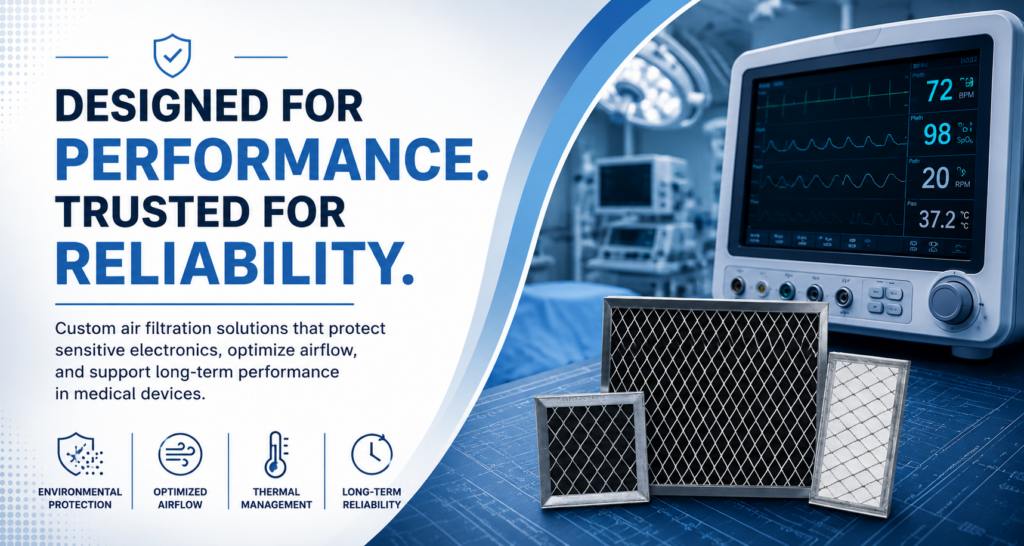
Medical devices are expected to perform consistently in environments where reliability is non-negotiable. From diagnostic equipment and laboratory instruments to patient monitoring systems and surgical technologies, device performance depends on maintaining stable operating conditions throughout the product lifecycle.
As medical technologies become more compact, powerful, and interconnected, thermal management and environmental protection have become critical design considerations. Air filtration plays a key role in helping manufacturers protect sensitive electronics, maintain airflow efficiency, and support long-term reliability.
Why Air Filtration Matters in Medical Devices
Modern medical devices often contain highly sensitive electronic components that generate heat during operation. Without proper airflow management, elevated temperatures can negatively impact performance, shorten component lifespan, and increase the risk of unexpected downtime.
At the same time, medical equipment may be exposed to airborne contaminants such as:
- Dust and particulates
- Pollen and environmental debris
- Moisture and humidity
- Manufacturing contaminants
- Facility-generated airborne particles
These contaminants can accumulate within electronic enclosures, restricting airflow and potentially affecting sensitive components. Effective air filtration helps minimize these risks while supporting consistent thermal performance.
The Growing Importance of Thermal Management
Medical device manufacturers continue to pursue smaller footprints, greater functionality, and higher processing capabilities. These advancements often increase thermal loads while reducing the available space for cooling systems.
As a result, maintaining unrestricted airflow has become increasingly important. Well-designed filtration systems help balance contaminant protection with airflow efficiency, ensuring cooling systems can operate as intended without introducing excessive pressure drop.
Key design objectives often include:
- Maximizing airflow
- Reducing pressure drop
- Protecting sensitive electronics
- Supporting consistent operating temperatures
- Extending equipment lifespan
Custom Filtration Solutions for Medical Equipment
Every medical device has unique airflow, environmental, and mechanical requirements. Standard off-the-shelf filtration products may not always provide the optimal balance of protection and performance.
Custom air filtration solutions can be engineered to meet specific application requirements through:
Precision-Engineered Filter Frames
Custom frame designs help maximize available space while ensuring secure installation and consistent sealing.
Hydrophobic Filtration Media
Hydrophobic materials can help resist moisture intrusion while maintaining airflow performance in demanding environments.
Integrated Gasketing Solutions
Precision gasketing helps reduce bypass leakage and ensures air moves through the intended filtration path.
Application-Specific Airflow Designs
Engineered airflow configurations can optimize cooling performance while maintaining contaminant protection.
Reliability Through Predictable Performance
Healthcare organizations increasingly expect medical equipment to deliver reliable performance with minimal maintenance disruptions. Consistent airflow and contaminant protection contribute directly to operational stability and equipment longevity.
Engineering teams are placing greater emphasis on measurable performance criteria, including:
- Airflow efficiency
- Environmental resistance
- Filter durability
- Long-term consistency
- Lifecycle reliability
By incorporating environmental protection early in the design process, manufacturers can help reduce maintenance variability and support predictable device operation throughout the product lifecycle.
Supporting the Future of Medical Technology
The next generation of medical devices will continue to become smaller, more powerful, and more connected. As these innovations evolve, environmental protection and thermal management will remain fundamental to achieving long-term reliability.
Contact UAF today and let us help guide you through your next project!